

Showing posts with label behavior. Show all posts
Showing posts with label behavior. Show all posts
Apr 29, 2013
Dual Sex Therapy

Apr 24, 2013
Behavior Modification

Edward Thorndike was the first person to describe behavior therapy in 1911. He was focused on methods that modify behavior. Clearly, there was a reason to wish that some particular behavior be altered; thus implying that behavior can become malfunctioned and subsequently requires timely repair like a mechanical or electrical devices. Behavior therapy is as old as civilization itself. Asking a third person for advice regarding how to deal with the ill impact of another’s actions on oneself is behavior therapy. There are wide ranges of techniques that can be used to change the behavior of oneself or another. Pure behavior therapy without mindfulness is seen in animals (it is well understood as training). Human behavior is usually connected with thoughts and feelings. These are incorporated in the therapy paradigm.
Mar 30, 2013
Self Control (3)
Brain wiring

Resistance to impulse fulfillment can be attributed to specific areas of the human brain with alteration in neurochemical levels that promote (or when appropriate, protect from) rash decision-making. Broadly, the processing of thought and its systematization into rational evaluations is a knack known to few. Most act on gratifying impulses, failing to exercise any restraint on their needs and urges. It’s fun at times to make sudden plans and act on instinct in emotional situations if the outcomes are favorable. However normalcy is defined by the ability to be either impulsive or controlled depending on which is the most adaptive. Wise choices begin with an awareness of their existence.

Changing cues
Outcome focus
Nullification
Token economy
Remembrance
Overcooking
Loss identification
Feb 25, 2013
Reinforcer 4: Negative punishment

A conventional probability of defined outcomes
raises the prospect of certain behaviors if there is a well-established
contingency pattern between them. If you know that action A is going to root
action B (which already is something you deeply desire) it’s natural for you to
follow that particular behavior pattern. Behaviorism is a well-researched but quite a convoluted
science. Nonetheless, its practical implications are as lucid as common sense. An action
that brings favorable outcomes usually reinforces itself. And behaviors that need to be reinforced get implanted according to the strategies that have been used to cement them. There are several reasons why humans behave the way they do. These ought to be suitably understood to improve conduct. We know the 4 typical
behavior modification paradigms:
- Action followed by reward should lead to repetition of that action
- Behavior succeeded by punishment must decrease its frequency
- Deeds that prevent negative consequences tend to get reinforced
- Actions that cease positive outcomes should diminish themselves
Feb 23, 2013
Reinforcer 2: Punishment

Behaviors require a powerful meshwork of
reinforcement for them stand strong. Habits may be regarded as behaviors that
have solidified over time with constant cementing; they seem rigid and unbreakable.
Reinforcers are to be applied rightly to shape behavior appropriately. While
reward may seem like the commonly applied reinforcer, punishment is more than
often used in homes, schools, as well as society at large to terminate negative
and ill behaviors.
Reinforcer 1: Reward

Behavior Change
Behavior demands contingency responses that
strengthen or weaken its chances of repetition. Everything that a human does is
typically expected to instigate reaction in another. These reactions themselves
form the behavior of other individuals. The cycle pretty much continues until
these behaviors of people begin to influence their emotions and thoughts. The
chicken lays the egg and the egg hatches into yet another chicken. The child is
the father of the man who gives birth to yet another child in time. Behaviors
of people incessantly impel each other to change for better and occasionally worse
too. The transformations need to be appropriate to match the interpersonal
requirements in order for the outcome to be apt. Cement ought to be rightly
applied, else it solidifies in erroneous positions; behavior can get wrongly
reinforced with crooked outcomes.
Feb 9, 2013
Music and the mind
“One good thing about music: when it hits you, you feel no
pain.”
Bob Marley

Music offers peace with the world as well as with oneself.
It has the power to unshackle from anguish and distress. A tuneful soul gets
contained with happiness. Music offers celebration as the dopamine rush in the
brain contends serenity and gratification. Harmony in life and staying in tune
with thoughts are all metaphorical interpretations of the significance of melody
in existence. Pleasurable feelings associated with emotional music are the result
of dopamine release in parts of the emotional brain: the same anatomical areas
that underprop the pre-emptive and gratifying aspects of drug addiction. There
is evidence of synchronous connects in the cardiac (heart) as well as cerebral
(brain) functions that are influenced by sound waves of multiple wavelengths.
Music affects us in ways we are reasonably unaware of…
Jan 9, 2013
Whose side are you on anyways?
 |
| every oyster doesn't bear a pearl |
There are always choices, decisions, and verdicts offered; along with pronouncements expected of us at every stage in life. There are forever
options. And choices have to be made between:
Right Wrong
Left
Right
North South
Black White
Truth Lies
Real Fake
There is day and then there is night. But there is dawn and
noon and dusk and twilight too. The world we know has black and white but it
offers the options of gray. Yet preponderance and predilections guide your decisions.
Two sides to a coin, two directions, two paths, two poles, two elements, two
faces. What matters in life is whose side you take and what choices you make.
Jan 4, 2013
Psychiatry? Psychology? Thats crazy!

My child does not pay attention
He can’t sit at one place for long
His mind meanders in no time
Kids these days are just sluggish
They find excuses to evade study
Teachers at school just complain
Parent 1: I don't know what to do about this behavior; I can’t comprehend how to deal with this issue. Every time I meet his teachers they nitpick about how careless he is and how restless he gets at time, it’s so embarrassing for me. Maybe something is wrong with those teachers.
Parent 2: Well, have you considered taking him to a doctor?
Parent 1: Why do I need a doctor? He just needs to be spanked and grounded only then he will understand how to behave.
Parent 2: Your child may have a behavior issue or an adjustment problem; you could consult a psychiatrist and resolve this issue while he is still young. Probably hitting him and punishing him will worsen the situation
Parent 1: Huh! Why does my son need a psychiatrist? He is not mentally ill. He is not crazy or retarded. He is fine. I know what to do with my son. He's not crazy, you are!
He can’t sit at one place for long
His mind meanders in no time
Kids these days are just sluggish
They find excuses to evade study
Teachers at school just complain
Parent 1: I don't know what to do about this behavior; I can’t comprehend how to deal with this issue. Every time I meet his teachers they nitpick about how careless he is and how restless he gets at time, it’s so embarrassing for me. Maybe something is wrong with those teachers.
Parent 2: Well, have you considered taking him to a doctor?
Parent 1: Why do I need a doctor? He just needs to be spanked and grounded only then he will understand how to behave.
Parent 2: Your child may have a behavior issue or an adjustment problem; you could consult a psychiatrist and resolve this issue while he is still young. Probably hitting him and punishing him will worsen the situation
Parent 1: Huh! Why does my son need a psychiatrist? He is not mentally ill. He is not crazy or retarded. He is fine. I know what to do with my son. He's not crazy, you are!
Jan 1, 2013
Forgetfulness and Dementia

Memory is one of the most essential cognitive functions of the brain. Intellect, learning, communication, problem solving; all require an intact memory. For years together, our brain learns and retains new concepts and uses stored information to solve problems. And then one day, after many years, this ability declines and we begin to forget what we once knew. Dementia is a brain disorder in which one cannot remember what was learnt in the past and also, one is unable to retain new information. It is well understood as a deterioration of the memory, intellect, as well as personality; and manifests as a complete transformation of behavior, demeanor and thinking.
Dec 25, 2012
Anorexia and Eating Disorders

Dec 15, 2012
Who's obsessed?

Nov 29, 2012
Get charged to take charge!

Sometimes it becomes hard in grouchy situations to
really figure who was whining, the child or the parent. And then both sides
feel they don't know who started it. It happens in adult-adult interactions
too. You know it but sometimes you fail to see it. You lose control of yourself
when you are not in charge. Alternatively you are never in charge when you are
out of control. So its essential to charge yourself with the right plugins to keep you energized!
Nov 28, 2012
Strike! (Not your child; the balance)
Disciplining
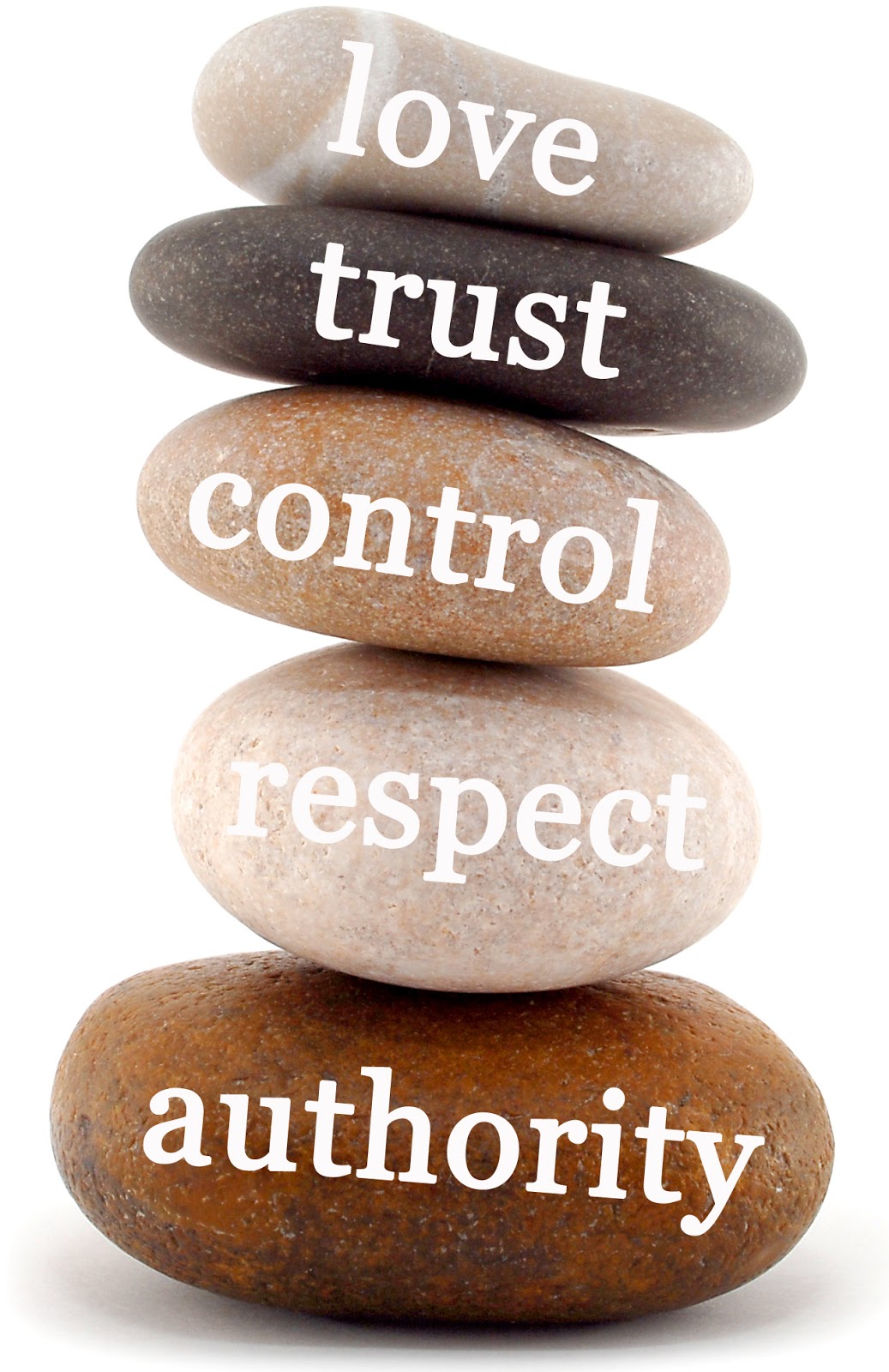
is all about your knack at striking that balance between autocracy and
permissiveness with your child. Children need to get the right message so that
they learn the right behaviors. Everyone needs to have these limits set for themselves so they
find direction towards the goals they need to accomplish. The younger your
child, lesser the self-understanding of boundaries, and more defined should be the limits that you set for them. You love your children (everyone usually does) and the virtues you instill in them come with some level of control and authority; levels of which you have to determine as per your own preferences. Boundaries provide security for a child whose exploratory disposition leads her
to explore, but her inexperience may lead her astray. You are the guiding light who knows it all and can direct her.
Nov 25, 2012
What's your parenting style?

There
are many ideas about how to raise children. Sometimes as parents you adopt the
ideas that your own parents may have used with you. You get advice from friends. You read books about
parenting. You suf the internet. You take classes on parenting. Yet you never have all the answers
because your kids raise all new questions everyday and well known theories of parenting fail. You feel that you create new theories each day in dealing with your little ones. However, research repeatedly emphasizes what
parenting practices are effective and are likely to lead to positive outcomes
for children.
Nov 22, 2012
Behavior modification for parents
It’s so normal for parents to consult therapists for their children’s behavior. You don't realize that your children wish that they could get some treatment for you at times. Just as you wish your kids would introspect and appreciate how much trouble you go through for them, likewise they too feel that you ought to look within and ask yourself how you really make your kids feel about your own behavior towards them. You blame them for making you the monster. You need to step back and ask yourself...

Nov 13, 2012
When your child is lying to you

Fear:
the driver
The main
reason people lie (kids and adults included) is because they're afraid that if
they tell the truth, something unpleasant will happen. Lying is a defense
mechanism. It's an attempt to protect from perceived danger. People who lie
tend to be scared in some way. Your
children maybe scared of you. They sense that autocratic authoritativeness and tremble. That must not make you proud. Parents often
misconstrue fear for respect. Fear is enforced; respect is instinctive.
Nov 8, 2012
Making your child obey you

The dictum in life is to be reasonable in
expectations so that we are not let down. Maxims also state that when you put
in your best you are welcome to expect the finest outcome. And then, laws of
physics state that every action generates an equal and opposite reaction. Next,
mirrors reflect back at us what we truly are, nothing more, naught less. So the
key to happiness (backed by evidence base and science) is to sow the best seed
so that you get supreme and flawless crop. That crop who ‘wants’ to listen to
you. The crop who ‘waits’ for your command because he has the utmost desire to
follow you as his role model. The crop that every parent wishes, dreams, prays,
pines for. The crop of the obedient child.
Nov 7, 2012
Why toddlers are difficult creatures

To cope with toddler behavior is a
mammoth task. You tend to lose your head and test your own patience and you
frequently turn into a monster that surprises you more than anyone else around!
You react unthinkingly, you say things thoughtlessly and sometimes you lash out
with your actions foolishly. If you appreciate some basic principles of
development you will understand your children and their behavior challenges gracefully.
When you know what you are expecting and more so why it’s coming your way, you
can deal with the calamity better…
Subscribe to:
Posts (Atom)